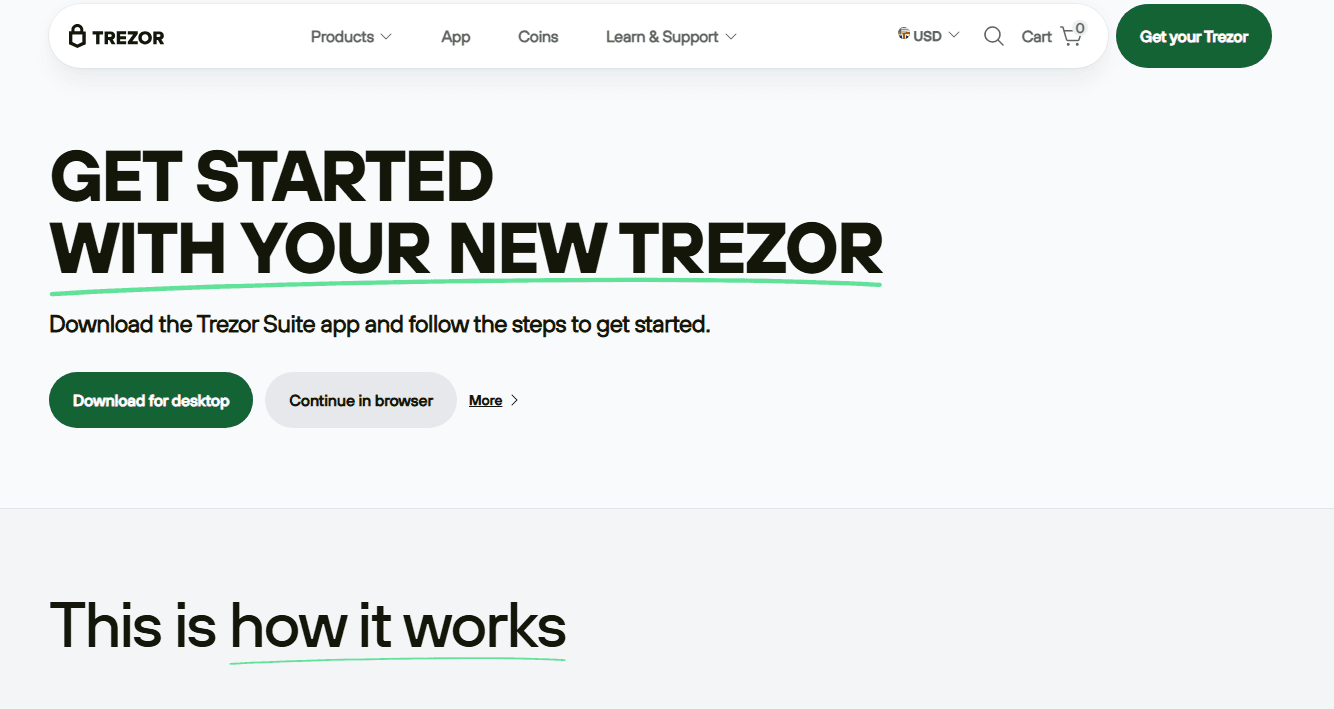
Introduction to Trezor Login
Trezor login is the secure access process used by cryptocurrency holders to manage their digital assets through a Trezor hardware wallet. Instead of relying on traditional usernames and passwords, Trezor uses hardware-based authentication that places control entirely in the hands of the user. This approach significantly reduces the risks associated with online attacks and unauthorized access.
Understanding the Trezor login process is essential for anyone who values long-term crypto security. From unlocking the device to approving transactions, every action requires physical confirmation, ensuring that assets remain protected even in hostile digital environments.
What Sets Trezor Login Apart
Unlike conventional login systems, Trezor login does not depend on centralized servers or stored credentials. There are no online passwords that can be leaked, reused, or stolen. Authentication happens through the physical Trezor device, which securely holds private keys offline.
This system ensures that access to funds is impossible without the hardware wallet itself. Even if a computer is infected with malware or spyware, the attacker cannot bypass the Trezor login process without direct access to the device.
The Role of the Trezor Hardware Wallet
The Trezor hardware wallet is the cornerstone of the login process. It stores cryptographic keys inside a protected environment designed to resist tampering and unauthorized extraction. These private keys never leave the device under any circumstances.
During login, the wallet communicates with wallet management software to confirm identity. All sensitive actions, including account access and transaction approval, are validated directly on the device, keeping users in full control.
Starting a Trezor Login Session
A Trezor login session begins when the hardware wallet is connected to a computer or supported mobile device. Once connected, the device prompts the user to unlock it using the configured security settings.
After successful authentication, users gain access to their cryptocurrency accounts, balances, and transaction tools. The login session remains active only while the device is connected and unlocked, adding another layer of security against unauthorized use.
PIN Code Authentication
The PIN code is a primary defense mechanism in the Trezor login process. It prevents unauthorized physical access to the device and is required each time the wallet is unlocked.
Trezor uses a unique randomized keypad system during PIN entry. The keypad layout changes every time, protecting against keylogging and screen-capture attacks. The PIN is entered on the device interface, ensuring it is never exposed to the connected computer.
Repeated incorrect PIN entries result in increasing delays, making brute-force attempts extremely difficult.
Passphrase Protection for Advanced Users
Trezor login supports an optional passphrase feature for users who want enhanced security. A passphrase acts as an additional secret layered on top of the recovery seed, creating separate wallets within the same device.
Each passphrase unlocks a different wallet environment. Without the correct passphrase, the associated funds remain completely inaccessible. This feature is particularly useful for users seeking extra privacy or protection in high-risk situations.
Passphrases must be remembered precisely, as losing them results in permanent loss of access to the corresponding wallet.
Secure Login Through Official Wallet Software
Trezor login is performed through official wallet management software that serves as the interface between the user and the hardware wallet. This software allows users to view balances, manage assets, and initiate transactions after authentication.
Before granting access, the software verifies the authenticity of the connected device. This ensures that only genuine Trezor wallets can be used, protecting users from counterfeit or altered hardware.
Accessing and Managing Accounts After Login
Once logged in, users can manage multiple cryptocurrency accounts from a single Trezor wallet. Each account represents a different asset or blockchain and remains protected by the same hardware-based security.
Users can monitor balances, review transaction history, and organize assets efficiently. Every sensitive action continues to require confirmation on the device, maintaining strong security throughout the session.
Transaction Approval and Verification
All transactions initiated during a Trezor login session must be approved directly on the hardware wallet. Transaction details, including destination address and amount, are displayed clearly on the device screen.
This verification step ensures that users can confirm exactly what they are approving. Even if malicious software attempts to alter transaction details on the computer, the hardware wallet prevents unauthorized transfers.
Handling Incorrect Login Attempts
If an incorrect PIN is entered during Trezor login, the device automatically enforces a waiting period before another attempt can be made. Each failed attempt increases the delay, discouraging repeated guessing.
This security measure protects against brute-force attacks and ensures that unauthorized users cannot easily access the wallet. The delay system works automatically without affecting stored funds.
Recovering Wallet Access
If login is not possible due to a forgotten PIN or device malfunction, access can be restored using the recovery seed. The recovery seed is a unique set of words created during the initial wallet setup.
This seed allows users to restore their wallet on a new or reset device. Because the recovery seed provides full control over funds, it must be stored securely offline and never shared with anyone.
Anyone who obtains the recovery seed can access the wallet, making its protection critical.
Common Mistakes to Avoid During Login
One common mistake is attempting to log in on shared or public computers. Trezor login should always be performed in a trusted environment to reduce exposure to malware.
Another mistake is storing recovery seeds digitally or sharing them with others. Best practice is to write the seed on paper and store it in a secure location. Users should also remain cautious of fake login screens and impersonation attempts.
Maintaining Long-Term Login Security
Long-term security depends on consistent habits. Users should keep their device firmware up to date, use a strong PIN, and consider enabling passphrase protection for additional safety.
Maintaining physical control of the hardware wallet and carefully reviewing transaction details during every login session further strengthens security. These practices help ensure continued protection as digital threats evolve.
Why Trezor Login Is Trusted Globally
Trezor login is trusted by millions of crypto users worldwide because it removes reliance on centralized systems and online credentials. By combining hardware authentication with physical user confirmation, Trezor provides transparency, control, and resilience.
This approach aligns with the core principles of cryptocurrency, empowering users to protect their assets independently without third-party reliance.
Conclusion
Trezor login offers a secure, user-controlled method for accessing and managing cryptocurrency holdings. Through hardware-based authentication, PIN protection, and optional passphrases, it eliminates many risks associated with traditional login systems.
By understanding how Trezor login works and following strong security practices, users can confidently safeguard their digital assets. When used correctly, a Trezor hardware wallet provides a reliable and long-term solution for secure cryptocurrency access and management.